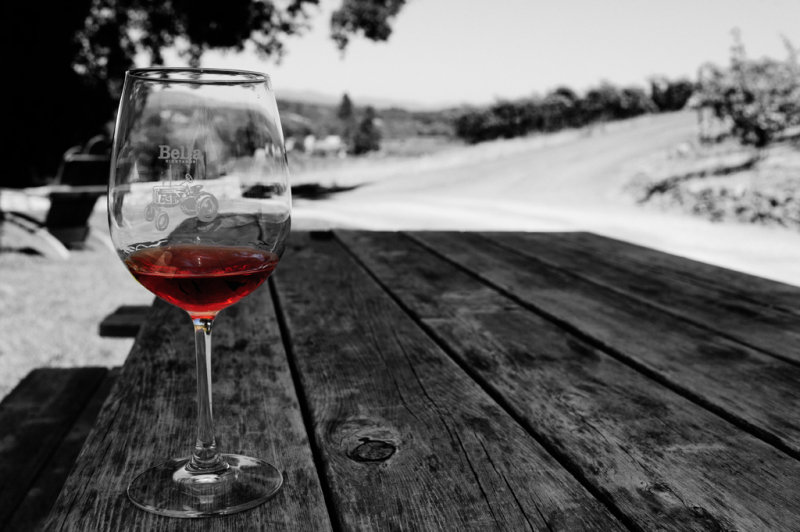
Wine: the ancient beverage of fermented grape juice, has formed a critical component of meals for hundreds of years. While we are unsure of the exact origins of winemaking, the current archeological record shows that a fermented drink based on grapes dates back to approximately 7000 BCE in the Far East. The record also shows that soon thereafter a more identifiable form of what we today consider wine can be found in the Near East and the Baltic Peninsula on the European/Asian border. Wine production in the country of Georgia dates back at least 8000 years, to about 5000 BCE, and they proudly like to claim that they are the birthplace of wine. That being said archeologists do believe that the Georgian people were the first to domesticate and cultivate grape vines.
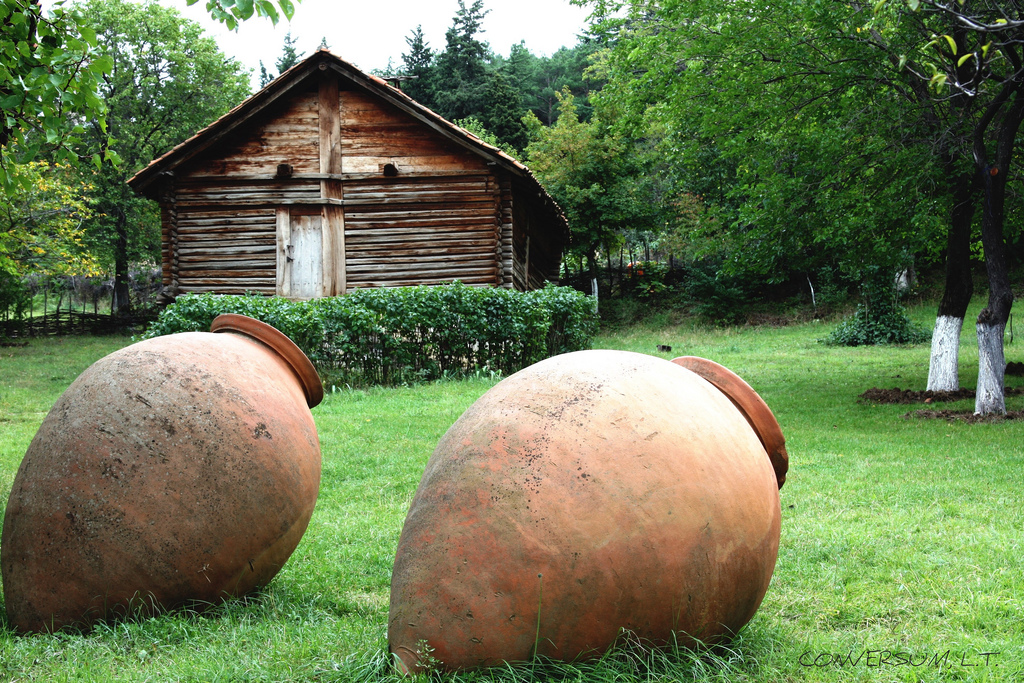
Qvevri
In ancient Georgia, villages and small towns were based around three central factors: a place of worship, wine and water. Sadly the Georgian people were not prolific record keepers, or storytellers, and much of this history has been lost, even that from the Middle Ages when the rest of Europe began to write down it’s history. What does remain is the history of toasting during gatherings, a tradition that continues today. No meal or gathering with a Georgian is complete without a long toast … or four.
But Georgian wine is a unique entity, completely different from western styles we are used to. And they are currently taking the wine world by storm, one of the fastest rising trends among wine nerds. Made from a range of over 500 indigenous grape varieties, Georgian wines are produced in underground clay vessels called qvevri, or kvevri, and have been produced this way since antiquity. In fact Georgia is seeking to gain UNESCO World Heritage status for its wine industry.
It is these qvevri that produce the most distinctive characteristic of these wines. Whole grapes clusters, stems, skins and seeds included, are loaded into the qvevri, which are buried underground to maintain a consistent temperature, and left to ferment with natural yeasts. Of course this is a bit of a generalization, the wine making varies greatly from region to region, with stems being removed in the warmer regions to prevent the wines from becoming too bitter. This same technique is used for red, white and rose wines. The white wines are actually Amber wines as they rest in contact with the skins and take on a unique color. The rose wines are actually natural rose wines, they also rest on the skins but are extremely light red wines that produce rich colored roses, not like the pale pink Provencal style we are used to.
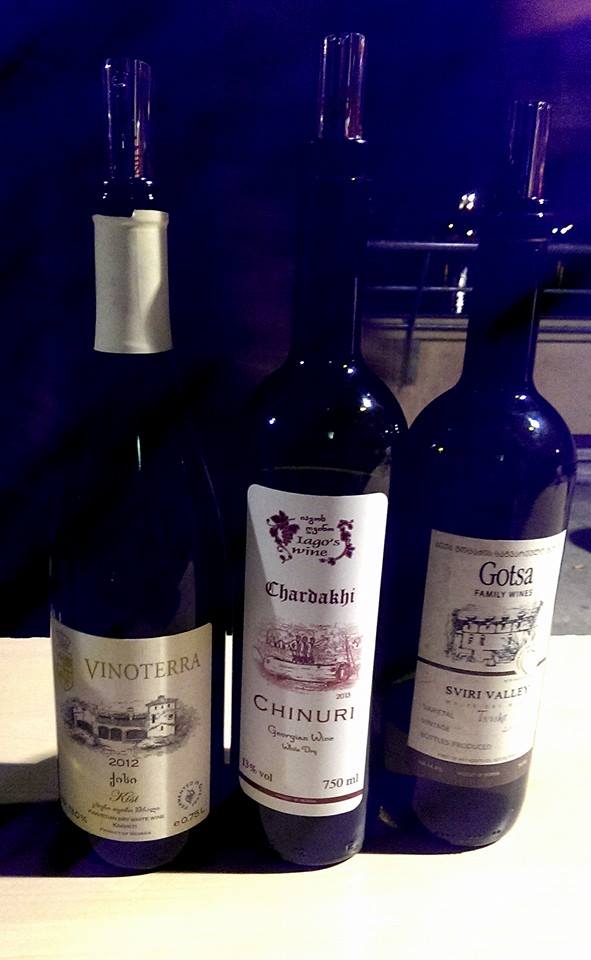
Georgian Wines © C. Lafarge
This year, one of my fellow students is a Georgian. And thanks to his connections and his knowledge the school was able to host a Georgian wine lecture and tasting. Sadly I was a little late and missed the first half of the lecture but I was able to enjoy my second taste of Georgian wines. I first tasted Georgian red wines at the DWCC in Montreaux during a very busy tasting. I was unable to talk to the representative and understand the wines and was sadly disappointed. This time I got a better understanding of what makes Georgian wines unique. And I got to taste red, white and rose wines. Again, I have to confess these are not my favorite wines. The red was incredibly earthy and dense on the nose but was surprisingly fruity. The amber whites I tried were acidic and a bit sharp with a distinctive nose of dill pickles. But my favorite wine from the night was the rose. Rich in color, almost like an anemic Pinot Noir, it was crisp and fruity with a subtler nose.
That being said, our classmate stressed Georgian wines are meant to be enjoyed with food and in a traditional Georgian environment. Sadly I was trying to visit while my friend M. completed an internship there last year, but due to the difficulties in the Ukraine, I was unable to go. But I now have additional connections in Georgia and I will hopefully make my way there one-day to get a true Georgian wine experience and hopefully discover a true appreciation for the wine.
Please don’t let my impressions stop you from exploring Georgian wines. They are a unique experience worth discovering on your own.

 Cuvee Appeal